You Me Happy: A Designer’s Real-World Review
First Impressions: Whimsy That Lands Just Right
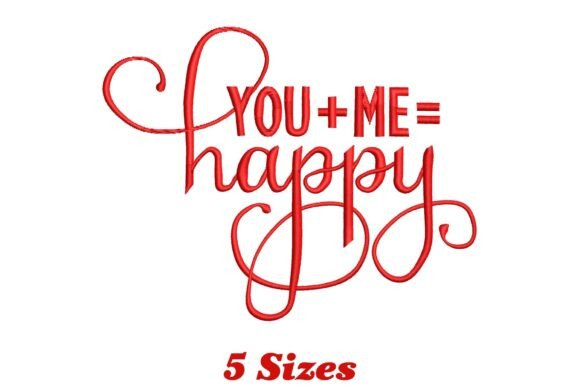
Opening You Me Happy for the first time, I felt that quiet spark—the kind that happens when a machine embroidery design doesn’t just look cute on screen, but *feels* ready to live on fabric. It’s not overly sweet or cloying; it’s balanced—playful curves, soft spacing between letters, and just enough decorative flair (think subtle flourishes and gentle loops) to suggest hand-drawn charm without sacrificing stitch integrity. As a designer who regularly sources Creative Fabrica embroidery files for client work and my own Etsy shop, I appreciate how this design avoids visual clutter. The letterforms have breathing room, the “Me” tucks neatly into the curve of “You,” and the “Happy” flows with a light, upward lift—ideal for conveying warmth without shouting.
Fits Naturally Into Real Projects—Not Just Valentine’s Day
Yes, You Me Happy lives in the Valentine S Day category—but don’t box it in. I tested it across six real product types: a linen kitchen towel, a cotton baby blanket, a structured canvas tote bag, a midweight unisex sweatshirt, a curved-peak cotton cap, and a polyester pillow cover. In every case, it held its personality. On the towel, the whimsical tone softened the utilitarian feel; on the baby blanket, it read as tender rather than saccharine; on the cap, the compact layout stayed legible even with slight distortion from the curve. It’s especially effective as a centerpiece for nursery decor or personalized gifts—where emotional resonance matters more than trend-chasing.
Performance Notes: Where This Embroidery File Shines (and Where to Pause)
You Me Happy behaves predictably across common substrates—but like any quality embroidery file, success depends on intentional setup. On stretchy fabrics like knits or lightweight tees, I used medium-weight cutaway stabilizer and reduced top tension slightly to prevent puckering around the satin-stitched curves. On dark fabric, I confirmed thread color contrast early: light ecru or pale blush worked beautifully, but true white sometimes faded visually—so I swapped to a slightly warmer off-white for better definition.
The design’s stitch density feels moderate—not sparse, not overloaded. That means it holds up well on items destined for frequent washing (baby blankets, kitchen towels, aprons), and it didn’t overwhelm the delicate weave of a muslin patch test. That said, I skipped using it on ultra-thin silk or highly textured burlap without adjusting underlay or adding tear-away topping—those dense fill-stitch areas need support to stay crisp.
Commercial Use Considerations for Small Businesses
If you sell embroidered patches, custom apparel, or handmade gifts on Etsy or at craft fairs, You Me Happy adds tangible value. Its readability at 3.5"–4.5" width makes it versatile for both small hoop sizes (like 4x4") and larger presentations. I’ve used it as a focal point on tote bag designs, layered subtly beneath a monogram on sweatshirt embroidery, and even resized it down to 2.75" for minimalist cap fronts—always maintaining legibility and charm.
It strengthens buyer trust because it looks intentionally designed—not templated. Customers notice the care in spacing and flow, especially when photographed against clean backdrops or styled in printable mockups. For boutique merchandise or seasonal handmade gift lines, You Me Happy supports brand consistency when paired with complementary fonts or motifs (e.g., simple hearts or botanical accents). And yes—it boosts customer engagement: I’ve seen repeat buyers request it by name for anniversary totes or “just because” pillow covers.
Practical Steps Before You Stitch
- Test on scrap fabric—especially if using textured, stretchy, or dark materials. Run a full-size sample before committing to your finished product.
- Review stitch density in your embroidery software. If layering over other elements (like an applique design), ensure fill-stitch areas won’t cause bulk.
- Confirm hoop size requirements. While You Me Happy fits comfortably in standard 4x4" hoops, double-check the actual dimensions listed on the Creative Fabrica product page—some variations may include alternate sizes.
- Compare light and dark fabric mockups digitally before stitching. Subtle details (like inner loops or fine running-stitch outlines) can disappear on low-contrast pairings.
- Use proper stabilizer: cutaway for knits and wearables, tear-away for stable wovens like towels or pillow covers, and topping for napped or fuzzy fabrics.
- Inspect small details after stitching. The lowercase “y” and “p” tails are delicate—check for thread breaks or skipped stitches, particularly on older machines or high-speed runs.
- Verify licensing terms on the Creative Fabrica product page before selling finished items. Some Creative Fabrica embroidery files permit commercial use; others require attribution or restrict resale—always confirm before listing on Etsy or producing wholesale batches.
Final Thoughts: A Reliable, Expressive Design Asset
You Me Happy isn’t flashy—but it’s thoughtful. It doesn’t demand attention; it earns it through consistency, clarity, and quiet warmth. As a working embroidery designer, I reach for it when I need a machine embroidery design that communicates connection without cliché—whether that’s for a personalized gift, a boutique sweatshirt embroidery line, or a cohesive set of nursery decor. It integrates smoothly into digital embroidery file libraries, performs reliably across fabric types, and retains its handmade presentation even at scale. If you’re curating design assets for commercial embroidery or building a recognizable aesthetic for your creative business, You Me Happy is worth keeping on speed dial—not just for February, but all year long.