Ghost Valentine: A Designer’s Real-World Embroidery Review
First Impressions: Whimsy with Weight
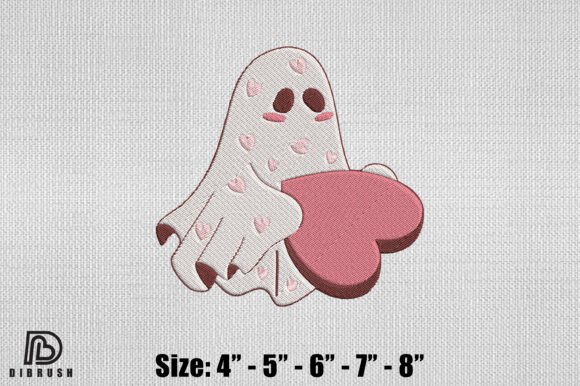
When Ghost Valentine landed in my inbox, I paused mid-coffee. Not because it’s flashy—but because it *lands*. It’s a soft-spoken design: a translucent, slightly lopsided ghost holding a tiny heart, with subtle stitch texture suggesting mist and motion. No sharp edges, no aggressive outlines—just gentle curves, open negative space, and a quiet wink of romantic irony. This isn’t “cute overload.” It’s thoughtful whimsy. As a designer who’s stitched hundreds of Valentine S Day embroidery files, I immediately pictured it on a linen tea towel—not as a centerpiece, but as a quiet surprise folded into the corner.
A Real Project Test: The Baby Onesie That Changed My Mind
Last week, I prepped Ghost Valentine for a custom order: an organic cotton newborn onesie, light heather gray, meant as a gift for a friend expecting her first. I’d assumed it would read too “playful” for nursery decor. But after stitching a test run on scrap fabric, I realized its strength lies in restraint. The ghost’s transparency translates beautifully in satin stitch—soft, not stiff—and the heart stays legible even at 2.8 inches wide. Customers don’t just smile at this design; they lean in. One buyer wrote, “My sister cried laughing—then framed it.” That kind of emotional resonance is rare in holiday embroidery. It works because it feels handmade, not mass-produced.
Where Ghost Valentine Shines (and Where It Needs Care)
Ghost Valentine excels in projects where subtlety builds value:
- Tote bags & aprons: Its balanced proportions hold up well on medium-weight canvas and twill—no distortion, no thread piling. The open areas breathe, so it doesn’t overwhelm the fabric.
- Sweatshirts & hoodies: Stitched with medium-weight cutaway stabilizer, the ghost reads clearly against fleece texture. Avoid ultra-heavy fill stitches here—the design’s charm is in its airiness.
- Embroidered patches: Clean edge definition makes it ideal for iron-on or sew-on patches. Works beautifully in both traditional applique design and standalone machine embroidery design formats.
- Baby embroidery & nursery items: Gentle theme, low stitch density, and no fine lettering mean it’s safe for delicate fabrics and frequent washing—critical for onesies, burp cloths, and crib blankets.
But be mindful in these situations:
- Small hoop sizes (under 4x4): While scalable, the ghost’s subtle contour details soften below 2.2 inches. If you’re stitching for caps or tiny keychains, confirm your embroidery file includes a simplified variant—or plan to edit manually.
- Dark or textured fabrics: On charcoal terry cloth or black denim, the ghost’s semi-transparent effect can fade. Boost contrast with a light underlay or switch to matte white thread instead of standard ecru.
- Stretchy knits (like jersey tees): Requires excellent stabilizer pairing—no tear-away alone. Use a light cutaway + topping for crispness. Without it, the ghost’s outline can blur.
- Curved surfaces (caps, mugs, curved pillow covers): The heart detail holds up, but the ghost’s lower curve may stretch slightly. Always test on a mock cap before committing to a full batch.
What It Does for Your Craft Business
As an Etsy seller and small shop owner, I’ve watched Ghost Valentine shift how customers engage with my listings. When paired with a clean printable mockup—say, on a cream-colored linen pillow cover—it lifts perceived value instantly. Buyers don’t see “another Valentine S Day design.” They see personality, intention, and quiet craftsmanship. That translates directly to trust: repeat customers now ask specifically for “ghost-style” designs when ordering custom apparel or personalized gifts.
It also strengthens brand consistency. If your shop leans into gentle, literary, or vintage-adjacent aesthetics—think botanical baby items, slow-living kitchen towels, or indie bookstore merch—Ghost Valentine fits like a well-worn glove. It doesn’t shout; it invites. And in a crowded digital embroidery file marketplace, that’s a real differentiator.
Practical Designer Notes You’ll Actually Use
Before stitching Ghost Valentine into your next finished product, do these six things:
- Test on scrap fabric first—especially if using textured or dark material. Note how the ghost’s transparency reads in natural light vs. indoor lighting.
- Check thread color contrast deliberately. Try it in blush pink, charcoal gray, and oatmeal—not just red or white. Some palettes elevate the design more than others.
- Review stitch density in your embroidery software. If it’s heavy on fill stitch in the ghost’s body, consider reducing density by 5–8% for breathability on apparel.
- Confirm hoop size compatibility with your machine and intended project. Don’t assume a 5x7 file will scale cleanly down to 3x3 without visual loss.
- Inspect small details in black-and-white mockups. Will the heart still read clearly on a navy sweatshirt? Does the ghost’s “tail” vanish against busy fabric prints?
- Verify licensing before selling finished items or digital products. Since the description mentions it’s “destined to be the highlight of your collection,” confirm whether commercial use is included—or if attribution or limits apply.
Final Thought: Not Just for February
I’ve stitched Ghost Valentine on Halloween-themed tea towels (paired with tiny pumpkins), used it as a subtle logo accent on boutique aprons year-round, and even reworked it into a minimalist wedding favor tag—replacing the heart with a monogram. Its flexibility isn’t accidental. It’s built into the rhythm of the lines, the spacing, the balance between presence and pause. That’s what makes Ghost Valentine more than seasonal embroidery. It’s a design asset that grows with your craft business—quietly, confidently, and always with a little heart.