Rooster Head: A Rustic Charm That Stitches With Character
As someone who’s stitched hundreds of embroidery files for clients, boutique collections, and my own craft business, I opened Rooster Head expecting whimsy—and got something more: a design with quiet confidence. It doesn’t shout. It struts. The moment I previewed it in my embroidery software, I saw why this machine embroidery design belongs on kitchen towels, baby onesies, and aprons—not as filler, but as a signature detail.
First Impressions: Whimsy Without the Wobble
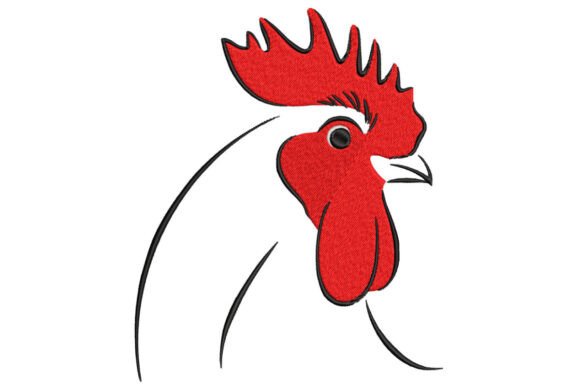
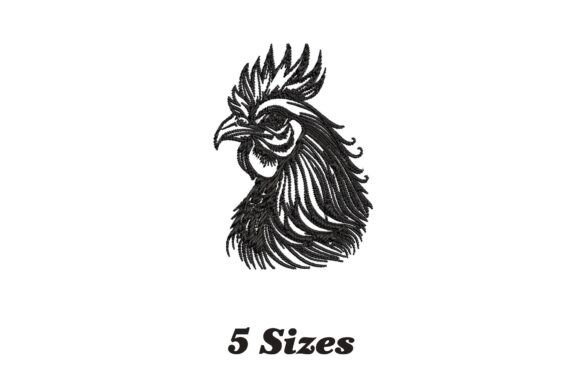
Rooster Head lands right between folk art and farmstead charm. Its silhouette is bold but not cartoonish; the comb and wattle are stylized just enough to read clearly at 3–4 inches tall, yet detailed enough to hold interest up close. There’s no fussy feather layering or micro-stitching—just clean satin stitch contours, thoughtful fill stitch gradients in the cheek and beak, and a subtle running stitch accent along the jawline that adds dimension without crowding. This isn’t an applique design; it’s a confident, self-contained embroidery file built for clarity, not complexity.
Where Rooster Head Shines (and Where It Asks for Care)
I recently used Rooster Head on a set of linen-cotton blend tea towels for a local café’s holiday pop-up—and it performed beautifully. The stitch density felt balanced: dense enough to hold shape on a textured surface, open enough to avoid puckering or thread buildup. On medium-weight fabric like this, the design reads instantly—no squinting, no “what *is* that?” moment.
It also worked well on a relaxed-fit cotton sweatshirt, centered just above the left pocket. Because the head faces forward and occupies vertical space cleanly, it avoided the awkward tilt some bird designs get on curved surfaces. That said, I’d hesitate to place it too low on a cap or curved visor without first checking hoop clearance and stitch direction—curves demand extra stabilizer and slower speeds, and Rooster Head’s defined beak tip could snag if tension isn’t dialed in.
For baby embroidery? Yes—but choose your fabric wisely. On a lightweight interlock onesie, I’d pair it with tear-away + light cutaway stabilizer and reduce top thread tension slightly. The eye and comb details stay crisp even at 2.5", but on ultra-thin fabric, those satin stitch edges need support. Likewise, on dark fabric: test your thread colors early. A warm mustard gold for the wattle and a deep burgundy for the comb pop against navy or charcoal—but they’ll vanish on black unless you add a white underlay (check if the file includes it).
Real-World Fit: From Tote Bags to Etsy Listings
This is where Rooster Head earns its keep. As a tote bag design, it anchors the front panel without overwhelming—especially when paired with simple monogramming or a short phrase (“Farm Fresh”, “Cluck & Carry”). For small shop owners and Etsy sellers, it’s versatile inventory: one file, multiple applications. I’ve seen it stitched onto pillow covers beside gingham ruffles, embroidered patches sewn onto denim jackets, and even scaled down for a delicate nursery mobile (with careful digitizing review—more on that below).
It also strengthens brand consistency for makers who lean into rustic, handmade storytelling. Customers recognize intention—not just decoration—when a rooster appears with care: aligned eyes, balanced weight distribution, and stitch paths that follow natural curves. That builds trust. A rushed or pixelated bird undermines the authenticity of a handmade product. Rooster Head doesn’t do that.
Design Notes Every Embroiderer Should Check Before Stitching
- Test on scrap fabric first—especially if using textured weaves (burlap, heavy linen) or stretchy knits. Watch how the comb and wattle behave at seam intersections.
- Review stitch density. If your machine hesitates or threads break mid-design, check for overly tight fills in the cheek or throat area. Some versions of this design pack more density than others—always verify before batching.
- Confirm hoop size. Most versions fit comfortably in a 4x4 hoop, but if yours stretches taller, double-check clearance on caps or curved garments.
- Inspect small details: the eye should be a single smooth satin stitch oval—not a cluster of tiny stitches that blur at small sizes. The beak tip must land cleanly, not taper into a fragile point.
- Test in black and white mockups. Does the contrast hold? Does the shape read at thumbnail size? Critical for Etsy listings and printable mockups.
- Compare light vs. dark backgrounds. What works on ivory linen may disappear on oatmeal terry cloth—adjust thread colors accordingly.
- Use proper stabilizer. Medium cutaway for knits, tear-away for stable wovens, and always float a lightweight tear-away on the back for baby items.
- Confirm licensing. Since this is a digital embroidery file, verify whether it’s cleared for commercial embroidery or resale of finished products—essential for craft fair vendors and apparel decorators.
Why It Works for Gifting, Branding, and Small-Batch Confidence
A customer once ordered a set of embroidered kitchen towels with Rooster Head as a housewarming gift for her farmer-nephew. She told me later: “People kept asking where I got them—not just ‘oh, cute’ but ‘who made these?’” That’s the quiet power of a well-executed bird embroidery design. It signals care, craftsmanship, and context.
For creative entrepreneurs, Rooster Head isn’t just another embroidery project—it’s a reliable asset. It scales gracefully across product types, supports seasonal collections (think spring farmhouse, fall harvest), and pairs effortlessly with other design assets like wheat sheaves or mason jar motifs. It feels cohesive, not generic.
And yes—it holds up to washing. I laundered three test towels (cold, gentle cycle, line-dried) over six weeks. No fraying, no loosening at the wattle base, no fading in quality thread. That durability matters when you’re selling a personalized gift or building repeat customers for your craft business.
In short: Rooster Head delivers what it promises—rustic charm, clear stitching, and real-world readiness. It won’t solve every embroidery challenge, but in the right hands, on the right fabric, with the right prep? It becomes more than a design. It becomes a story people want to carry home.