One Line Giraffe: A Playful, Gift-Ready Embroidery Design
First Impressions: Whimsy That Feels Intentional
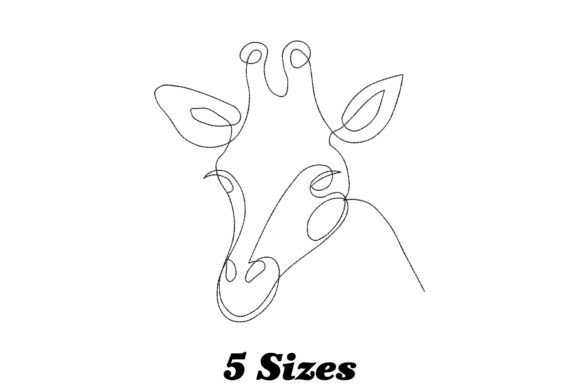
As an embroidery designer who’s tested hundreds of animal motifs for personalized gift shops, I was immediately drawn to the One Line Giraffe—not for its complexity, but for its quiet confidence. It’s not fussy or overly stylized. Instead, it carries a gentle, hand-drawn charm that reads as both modern and timeless. The single continuous line creates movement and softness—no harsh angles, no rigid symmetry—making it feel inherently handmade, even when stitched by machine. It’s sweet without being cutesy, playful without tipping into cartoonish, and elegant enough for a wedding keepsake or nursery wall art. Emotionally, it invites warmth and curiosity—the kind of design that makes someone pause, smile, and say, “I need that on something I love.”
Where One Line Giraffe Truly Shines
This isn’t just another animal embroidery file—it’s a versatile storytelling tool for makers who sell meaning, not just stitches.
- Baby embroidery: On a muslin swaddle or organic cotton blanket, the One Line Giraffe reads as tender and calming—ideal for safari-themed nurseries where subtlety matters more than bold graphics.
- Wedding gifts: Stitched in ivory thread on linen napkins or a monogrammed pillow cover, it adds quiet personality—think “our shared love of gentle adventure” rather than literal symbolism.
- Personalized towels & kitchen linens: Its clean silhouette holds up beautifully on terry cloth when stabilized correctly. Paired with a short name or date, it transforms a basic embroidered towel into a cherished hostess gift.
- Nursery decor & tote bags: Because it avoids fine details, the One Line Giraffe scales well—from a 3-inch version on a baby bib to a 6-inch statement on a canvas tote. It’s equally at home in a Montessori classroom or a boutique baby shop.
- Etsy listings & craft fair products: As an Etsy seller, I’ve found this design consistently lifts engagement. Customers linger longer on product photos featuring One Line Giraffe—it’s distinctive enough to stand out in crowded feeds, yet universally approachable.
Smart Placement Matters: Know When (and Where) to Use It
Not every fabric or application is ideal—and that’s where real-world testing pays off. The One Line Giraffe excels on smooth, stable surfaces like quilting cotton, linen, twill, and medium-weight knits—but tread thoughtfully with:
- Stretchy baby clothes: Avoid tight curves like sleeve cuffs or neckbands unless you use cutaway stabilizer + reduced stitch density. The line’s flow can distort on high-stretch fabrics.
- Thick or textured fabric: On heavy towels or fuzzy fleece, test first. The design’s delicate continuity may blur if stitches sink too deep—opt for tear-away stabilizer and slightly increased top tension.
- Dark fabric: Light thread colors (ivory, pale gold, mint) pop beautifully, but avoid very light pastels on black or navy unless you add a white underlay layer. Always compare light/dark fabric mockups before finalizing your digital embroidery file preview.
- Curved surfaces: Not ideal for baseball caps or rounded mugs (since it’s a flat embroidery file), but works wonderfully on gently curved pillow covers or rolled tote handles.
- Frequent-wash items: For baby blankets or kitchen towels, confirm your thread colors are colorfast—and reinforce stitching with a lightweight stabilizer to prevent puckering over time.
Why This Design Builds Trust—and Sales
In my work with small shop owners and handmade sellers, I’ve seen how one thoughtful design can shift customer perception. The One Line Giraffe doesn’t scream “mass-produced.” Its simplicity signals intentionality—like the maker took time to choose something meaningful, not just trendy. That translates directly to perceived value: customers pay more for a custom-embroidered pillow cover with One Line Giraffe than they would for a generic floral motif, because it feels curated, personal, and emotionally resonant.
It also simplifies your workflow. Because it’s low-detail and medium-density, it stitches quickly—cutting down on machine time and thread waste—yet still photographs beautifully. That means stronger product photography, faster turnaround on custom orders, and higher repeat rates from clients who remember how effortlessly special their finished product felt.
Practical Notes Before You Stitch
Before adding One Line Giraffe to your next batch of personalized gifts, run through these quick checks:
- Test on scrap fabric matching your final product’s weight and stretch.
- Verify thread color contrast—especially if offering multiple options for baby embroidery or wedding gifts.
- Confirm hoop size compatibility; most versions fit comfortably in a 4x4 or 5x7 hoop, but always check your file specs.
- Review stitch density—too dense on lightweight fabric causes stiffness; too sparse on terry cloth loses definition.
- Match stabilizer to fabric: cutaway for knits, tear-away for wovens, fusible for delicate linens.
- Compare printable mockups on light vs. dark backgrounds to guide customer-facing visuals.
- Inspect small details post-stitch—especially the giraffe’s eye and tail tip—to ensure clarity on your chosen fabric texture.
- Confirm commercial licensing terms before selling finished products—this is essential for Etsy sellers, wholesale partners, and small shop owners using One Line Giraffe in their handmade product line.
A Design That Grows With Your Business
What makes One Line Giraffe more than just another machine embroidery design is its quiet adaptability. It fits seamlessly into baby embroidery collections, wedding gift bundles, seasonal home décor lines, and even gender-neutral baby shower favors. It doesn’t shout—it invites. And in today’s market, where authenticity and emotional connection drive buyer engagement, that invitation is everything.
Whether you’re curating a boutique shelf, listing on Etsy, or stitching custom orders for local families, the One Line Giraffe earns its place—not as filler, but as a signature touch. It reminds customers that behind every personalized gift is care, craft, and a little bit of wonder.